

CoffeeEmbassy
Karimikui AA | Kenya Washed
Karimikui AA | Kenya Washed
Couldn't load pickup availability
Karimikui AA | Kenya
Producers – Rungeto Farmers Cooperative Society
Location – Ngariama, Kirinyaga County
Farm – 600 small scale farmers working with Karimikui Washing Station
Variety – Batian, Ruiru 11, SL28, SL34
Years Used – 1st Year
Altitude – 1600 - 1750 masl
Process – Washed
Cupping Notes – Orange, Apple Juice, Lemongrass
Roasted For – All filter brew methods
Roast Level – Light
Importer – Cofinet
Disclaimer: Cupping notes are a guide based on what we tasted whilst cupping this coffee. Your experience may differ depending on brewing method.
Download a Digital Tasting Card
A note from James, Head of Coffee: We’re back into Kenyan season, and there’s no better place to start than my personal favourite, Karimikui. While many Kenyan AA coffees are known for bold blackcurrant flavours, Karimikui stands apart with its bright, vibrant acidity, exceptional clarity, and layered complexity, rivaling some of the finest washed Colombian coffees on the cupping table.
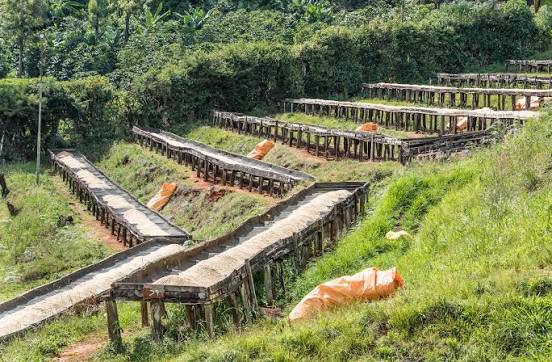
Karimikui is a renowned washing station operated by the Rungeto Farmers Cooperative Society, serving around 600 smallholder farmers on the fertile volcanic slopes of Mt. Kenya. Farmers grow coffee alongside bananas, maize, and shade trees, creating a diverse and sustainable farming system. Quality is carefully preserved through meticulous hand-sorting, overnight fermentation, washing and density grading, before the coffee is dried on raised African beds for 7–15 days. Regular turning, sorting, and careful protection from intense sun and overnight moisture ensure the clean, expressive cup that has made Karimikui one of Kenya's standout coffees year after year.
James.
About
Karimikui is a prominent washing station, or "factory," operated by the Rungeto Farmers Cooperative Society, which was established in 1997.
The station is named after a local tree species found in the area. It serves approximately 600 small-scale farmers in the Ngariama sublocation who cultivate coffee on the fertile, deep red volcanic slopes of Mt. Kenya.
These farmers typically manage diverse plots, growing bananas, maize, and shade trees like Macadamia and Grevillea alongside their coffee to maintain a balanced ecosystem. Through the Rungeto cooperative, members benefit from social welfare programs and a credit scheme for farm inputs and education.
Quality control begins with strict hand-sorting of cherries upon delivery. The cherries are then pulped and undergo an overnight fermentation process in concrete tanks to break down the mucilage.
After fermentation, the coffee is washed and graded by density in clean water channels, followed by a final soak. The parchment is then moved to raisedAfrican beds for sun-drying.
The drying stage typically lasts between 7 and 15 days, where the coffee is continuously hand-turned and sorted to ensure uniform moisture content. To protect the quality, the parchment is covered during the night and at times of high sun intensity.
Quality and Classification
Kenyan coffees are graded by screen size, with AA beans being the largest (17/18 screen, >7.2 mm). The country’s reputation for meticulous processing and world-class flavour has made its coffees some of the most sought-after globally.
The Varieties
SL28
Developed in the 1930s, SL28 is one of Kenya's most celebrated coffee varieties. It is renowned for producing exceptional cup quality with vibrant acidity, juicy fruit character, and remarkable sweetness. Although less resistant to disease, its outstanding flavour potential has made it a benchmark variety that continues to be highly sought after by coffee producers and roasters worldwide.
SL34
SL34 is another iconic Kenyan variety selected in the 1930s for its excellent cup quality and adaptability. It typically produces coffees with a rich body, bright acidity, and layered notes of blackcurrant, citrus, and brown sugar. While susceptible to disease, it thrives in fertile, well-watered regions and remains a cornerstone of Kenya's specialty coffee reputation.
Ruiru 11
Released in 1985, Ruiru 11 was developed to improve resistance to coffee leaf rust and coffee berry disease while maintaining good cup quality. It is a compact, high-yielding variety that suits modern farming systems. When grown and processed well, Ruiru 11 can deliver sweet, balanced coffees with bright fruit notes and a clean finish.
Batian
Batian is a newer Kenyan variety released in 2010 by the Kenya Coffee Research Institute. Bred for high yields, improved disease resistance, and excellent cup quality, it combines the strengths of traditional and modern varieties. Batian often produces coffees with vibrant acidity, floral aromatics, juicy fruit flavours, and a sweet, complex finish.
The Processing Method
Washed: Smallholders selectively handpick only ripe cherries and deliver them to Karimukui Factory. At intake, the Cherry Clerk oversees meticulous visual sorting and floating, accepting only dense, ripe cherries.
After intake, the cherry is pulped and fermented for approximately 12 to 24 hours. Following fermentation, coffee is washed in clean water and soaked for 24 hours.
After soaking, parchment is laid to dry on raised beds. Workers rake parchment frequently to ensure even drying. They cover drying parchment during the hottest time of day, to maintain slow, even drying and at night, to shelter parchment from moisture. It takes approximately 7 to 14 days for parchment to dry.
Filter Recipe
This is a good starting point for all of our filter coffees. Adjust Accordingly to your own preference.
Ground Coffee: 20g
Brewed Weight: 300g
Contact Time: 3:00-3:30 mins
Recommended Brewing Age
14+ days after roast date
Share