

CoffeeEmbassy
João Hamilton | Natural Brazil
João Hamilton | Natural Brazil
Couldn't load pickup availability
João Hamilton Natural Brazil
For the first time in our history, we’re proud to present a single origin microlot sourced directly through our new partnership with FAF Coffee in Brazil, marking an exciting step forward in how we connect with producers and you the customers!
When selecting our coffees, this lot immediately stood apart as a clear favourite and the natural choice for our first FAF Single Origin release. In the cup, it presents as a vibrant and playful coffee, with pronounced peach and kiwifruit notes up front, carried by a silky sweet maple syrup body and rounded out with a clean, refined finish. Enjoy.
Producer – João Hamilton
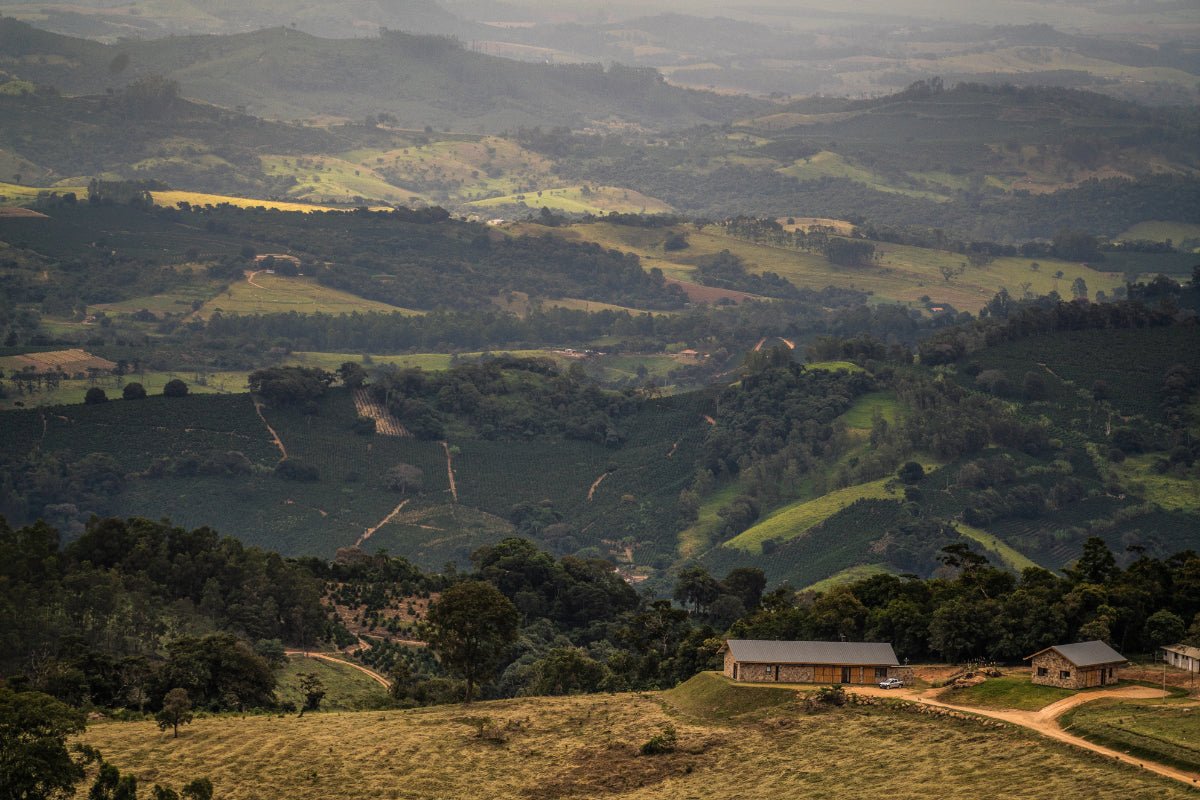
Location – Caconde, Mogiana, São Paulo, Brazil
Farm – Sítio Canaã
Variety – Catucaí 2SL
Years Used – First Year
Altitude – 1200 – 1350 MASL
Process – Natural 40 Hour Anaerobic Fermentation
Cupping Notes – Peach, Kiwifruit, Maple Syrup
Suitable For – All Filter Brew Methods and Espresso for the adventurous.
Roast Level – Light
Exporter – FAF Coffees
Importer – Coffee Embassy / Sucafina
Disclaimer: Cupping notes are a guide based on what we tasted whilst cupping this coffee. Your experience may differ depending on brewing method.
Download a Digital Tasting Card
About
Canaã farm was acquired in 1979, when coffee production was all commodity. At that time what mattered was quantity, not quality. At this point agro-toxic chemicals were commonly used to make the production successful. It was an agriculture that did not consider nature or future generations.
“After a few years in this system, no matter how much we poisoned the plants, we were no longer able to have a considerable production, in addition to destroying the mountain soil.”
In 2004 João Hamilton met Marcos and Felipe, who proposed a new model of agriculture, so the Canaã farm started to work with what João calls ‘Agriculture of Life’. “That's when we started taking care of the soil and water, treating sewage and planting trees around the springs. We started to separate plots and varieties, make selective harvesting and drying in a suspended terrace, thus acquiring a special quality in the coffees. With this quality in the drink, we are realizing the dream of being sustainable in the Mountains.”
With the help of FAFCoffees, this new attitude was also adopted by João Hamilton's neighbours, transforming Serra dos Ciganos into a community whose fundamental premise is sustainability. Today, FAFCoffees and João Hamilton are looking back at a long and sustainable partnership while always developing new projects and ideas for the future together. One example is the Serra dos Ciganos Washing Station, where João Hamilton is receiving and taking care of coffee from around 40 producers from the community. With the post-harvest processes being supervised and monitored very carefully in the Washing Station, the best quality can be ensured.
The Variety
Catucaí 2SL is a Brazilian-developed Arabica variety from the Catucaí family, bred through crosses involving Catuaí and Icatu to balance strong agricultural performance with quality potential. As a selected line, “2SL” is valued for its reliability in the field, offering good productivity, improved disease resistance, and consistent ripening, which makes it well suited to a range of growing conditions. It represents a modern breeding approach focused on creating cultivars that are both practical for producers and capable of delivering quality when grown and processed with care.
The Processing Method
Drying: Natural
Fermentation: freshly harvested cherries are sealed in an oxygen-free environment for roughly 40 hours before continuing with drying. In the absence of oxygen, naturally occurring yeasts and bacteria break down the sugars in the fruit differently than in traditional open-air fermentation. This controlled environment allows the producer to shape how acids, sugars, and aromatic compounds develop within the coffee, influencing the final cup profile in a deliberate way.
At around 40 hours, the goal is typically balance. The fermentation is long enough to enhance sweetness, texture, and fruit expression, but not so extended that it overwhelms the coffee’s inherent character. When executed well, this process can produce coffee with a rounder mouthfeel, elevated clarity, and more pronounced fruit qualities, while still maintaining structure and drinkability.
Filter Recipe
For this coffee, a coarser grind allows for greater clarity, letting those sweet fruit characteristics shine as the coffee cools. Start slightly coarser than your usual setting and aim for a faster brew time to highlight the coffee’s vibrant sweetness and structure.
This recipe is a good starting point for pourovers and the Hoop.
Ground Coffee: 20g
Brewed Weight: 300g
Contact Time:
Pour-Over 3:00,
Hoop 3:30 - 4:00
Water
Your brewing water can make or break whether a coffee tastes vibrant and expressive or flat and muted. Since local water supplies vary, we’ve partnered with Apax Lab to help optimise your home brewing water.
The following recipes are designed as starting points, focusing on clarity and even extraction to let the coffee’s natural acidity and sweetness shine.
For the Low-Key Approach
Base Water: Christchurch tap water
-
Hardness (GH): 45ppm
-
Alkalinity (KH): 52ppm
Apax Drops per 1L:
-
Tonik: 10 drops
-
Jamm: 5 drops
Since the alkalinity is already relatively high, Lilac is not needed, as alkalinity naturally buffers acidity. Instead, we focus on Tonik to increase hardness for improved extraction and Jamm to enhance texture, helping round out the cup.
Adjusting for Local Water Conditions
Christchurch's water supply is sourced from multiple groundwater wells across the city. While the overall water profile is relatively consistent, natural variation exists between supply zones. As a practical rule of thumb, the PPM may vary by approximately 5–15 ppm depending on location.
For this reason, the recommended APAX recipe should be viewed as a starting point rather than a fixed target. The strength of the APAX system lies in its flexibility; mineral ratios can be adjusted easily to suit local water conditions and taste preferences.
If coffees taste flat or lack vibrancy, increasing Tonik may improve extraction, flavour clarity, and acidity. If coffees taste overly sharp or acidic, increasing Jamm may help improve balance and perceived sweetness. Adjustments should be made incrementally and evaluated through taste.
For the Coffee Geek
Base Water: Fully distilled water (<1ppm TDS)
Apax Drops per 1L:
-
Tonik: 30 drops
-
Jamm: 5 drops
-
Lilac: 10 drops
This recipe provides a balanced foundation that can be adjusted further depending on your taste preferences and the coffee being brewed.
If you are outside of Christchurch, we recommend using the distilled water recipe.
Always add to the water before brewing - not the brewed coffee.
If you need assistance or are simply curious about the Apax drops, our Head of Coffee, James, welcomes all enquiries. You can get in touch at james@coffeeembassy.co.nz.
Recommended Brewing Age
14+ days after roast date
Share