

CoffeeEmbassy
John Wilmer | Natural Pacamara
John Wilmer | Natural Pacamara
Couldn't load pickup availability
John Wilmer Natural Pacamara
Another exceptional lot from John Wilmer, secured in very limited supply. Stocks are tight and this release won’t be around for long, enjoy it while you can! In the cup, ripe strawberry leads the profile, supported by a winey body and a soft candied lemon sweetness in the finish.
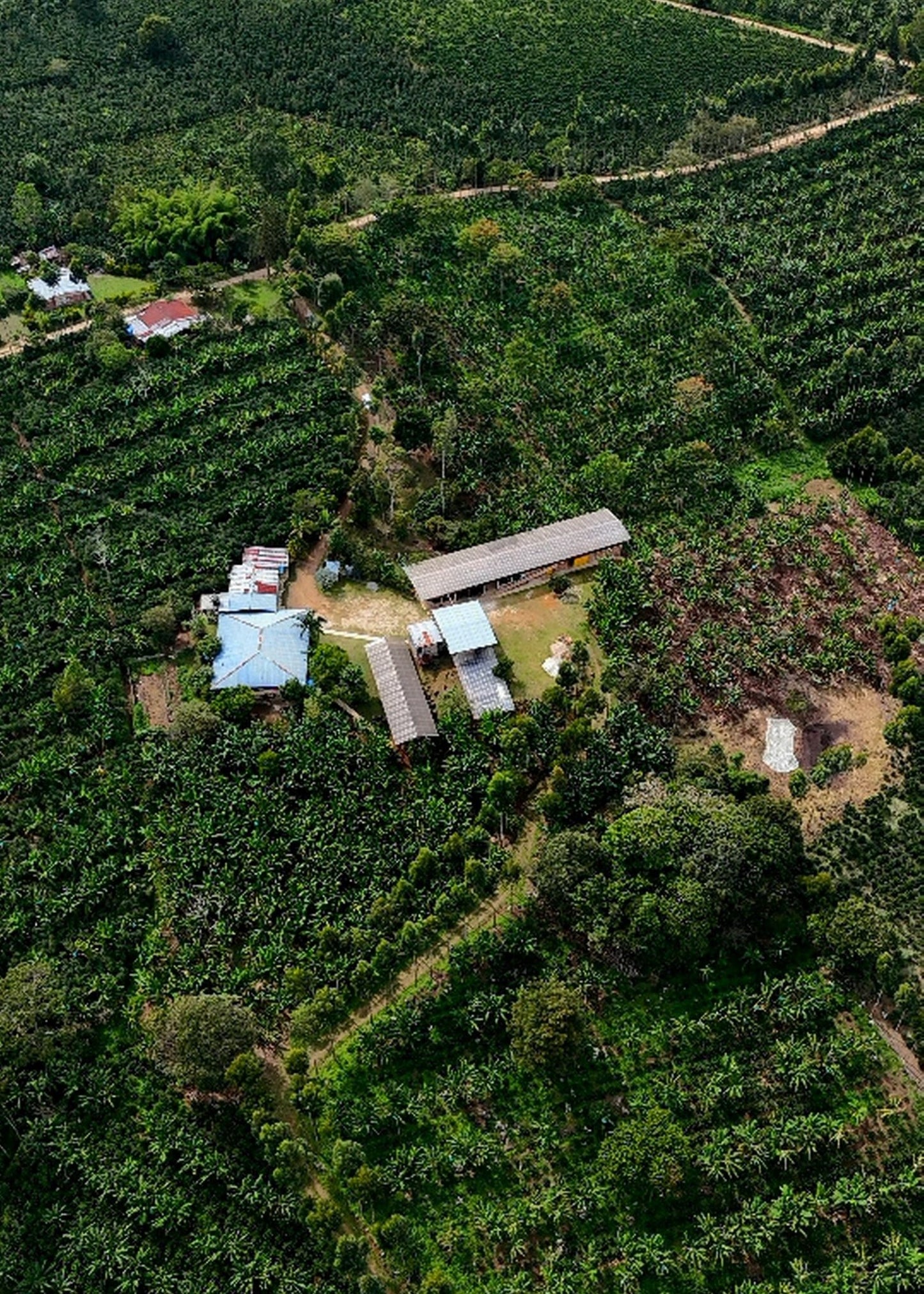
John Wilmer Cuellar is a fourth-generation coffee farmer in Acevedo, Huila, continuing his family’s legacy on the 10-hectare Finca Las Brisas. Inspired by his father, Wilmer, who overcame major challenges such as coffee rust and introduced new varieties to the farm, John has focused his efforts on producing exceptional specialty coffees. Today, Las Brisas cultivates a diverse range of varieties including Tabi, Pacamara, Geisha, Papayo, Typica, Bourbon Sidra, Bourbon Rayado, Bourbon Rosado, and Sudan Rume.
At Las Brisas, tradition is balanced with innovation. While John values classic processing methods such as washed, semi-washed, honey, and natural, he also experiments with advanced fermentation techniques, including oxidation and anaerobic processes. For this particular lot, ripe cherries are floated to remove defects before undergoing 130 hours of fermentation followed by 15 hours of oxidation to bring out distinctive and complex flavour profiles.
Producer – John Wilmer Cuellar
Location – Acevedo, Huila, Colombia
Farm – Las Brisas
Variety – Pacamara
Altitude – 1800 MASL
Years Used – 1st year
Process – Natural
Cupping Notes – Strawberry, Pinot Gris, Candied Lemon
Roast Level – Light
Suitable For – All Filter Brew Methods
Exporter – Equation Coffee
Importer – Opal Coffee
Download a Digital Tasting Card
Disclaimer: Cupping notes are a guide based on what we tasted whilst cupping this coffee. Your experience may differ depending on brewing method.
About
John Wilmer Cuellar grew up immersed in the world of coffee and is now a fourth-generation coffee farmer in Acevedo, Huila. His family has worked the land for decades, and today John continues the tradition with passion, running his 10-hectare farm, Finca Las Brisas.
What sets Las Brisas apart is John’s love for experimentation. While he respects traditional methods, he also explores innovative fermentation techniques, including oxidation and anaerobic processes. Ripe cherries are harvested, floated to remove defective beans, leaves, and debris, then undergo 24 hours of oxidation followed by 80 hours of fermentation in barrels. For John, tasting the coffee is the most rewarding part of the process, allowing him to explore the unique profiles of each batch.
Finca Las Brisas is also a family legacy. John’s father, Wilmer, overcame challenges like coffee rust by introducing new varieties such as Castillo and Colombia. Over time, the farm expanded into specialty coffees, including Tabi, Pacamara, Geisha, Papayo, Tipica, Bourbon Sidra, Bourbon Rayado, Bourbon Rosado, and Sudan Rume. John trained at SENA, studying nutrition, yield optimization, roasting, and cupping, and today continues the family’s commitment to excellence.
The farm features upgraded infrastructure, including a laboratory with a roaster and mill, as well as an ecological mill. Collaborating with neighboring farms to increase volumes while adding value, Las Brisas highlights traditional processes—washed, semi-washed, honey, and natural—bringing out the best in every variety and producing a cup that is both pure and memorable.
The Variety
Pacamara is a highly regarded Arabica coffee variety known for its large bean size and bold, complex flavour profile. It is widely used in specialty coffee due to its ability to produce standout, high-quality cups.
Pacamara was developed in El Salvador in 1958 by crossing two varieties: Pacas, a compact and high-yielding Bourbon mutation, and Maragogipe, a variety known for its unusually large beans and distinctive cup character. The intention behind this cross was to combine strong productivity with exceptional cup quality.
One of Pacamara’s most noticeable characteristics is its very large bean size, often significantly bigger than standard Arabica varieties. It performs best at higher altitudes, typically between 1300 and 1800 metres above sea level, where cooler climates and nutrient-rich soils support its development. The plant itself has broad leaves and a strong structure, although it can sometimes show genetic instability, occasionally expressing traits from its parent plants.
Despite its quality potential, Pacamara presents several challenges for producers. It generally produces lower yields than more commercial varieties and is more susceptible to diseases such as leaf rust. It also requires careful farm management and can be inconsistent from one lot to another.
In the cup, Pacamara is known for producing complex and expressive coffees with strong character. At its best, it delivers a highly distinctive and memorable drinking experience.
Roasting Pacamara requires a thoughtful approach due to its large bean size. Heat needs to be applied evenly to ensure proper development throughout the bean, as it is easy to underdevelop the interior while over-colouring the exterior. It often benefits from a slightly longer development phase and generally performs best at light to medium roast levels, where its complexity can be preserved.
Pacamara is considered a premium variety within specialty coffee. Its strengths lie in its unique and recognisable flavour profile, high quality potential, and strong appeal for specialty and competition coffees. However, it also comes with trade-offs, including higher risk for producers, less consistency, and a flavour profile that may not always suit more traditional preferences.
Overall, Pacamara is a high-impact coffee variety that combines visual uniqueness with the potential for exceptional cup quality. While it can be challenging to grow and roast, it remains a favourite in specialty coffee for its ability to deliver distinctive and memorable coffees.
The Processing Method
Natural
Fermentation: Ripe cherries are harvested, followed by floating to remove defective beans, leaves, branches, and other debris that may affect the coffee's quality. Then, the coffee undergoes anaerobic fermentation for 130 hours, followed by 15 hours of oxidation.
Drying: The beans are placed on drying sheds for 20 days for drying.
Moisture level: 10.5%
Filter Recipe
This is a good starting point for all of our Filter coffees. Adjust Accordingly to your own preference.
Ground Coffee: 20g
Brewed Weight: 320g
Contact Time: 3-3:30 mins
Water
Your brewing water can make or break whether a coffee tastes vibrant and expressive or flat and muted. Since local water supplies vary, we’ve partnered with Apax Lab to help optimise your home brewing water.
The following recipes are designed as starting points, focusing on clarity and even extraction to let the coffee’s natural acidity and sweetness shine.
For the Low-Key Approach
Base Water: Christchurch tap water
-
Hardness (GH): 45ppm
-
Alkalinity (KH): 52ppm
Apax Drops per 1L:
-
Tonik: 10 drops
-
Jamm: 5 drops
Since the alkalinity is already relatively high, Lilac is not needed, as alkalinity naturally buffers acidity. Instead, we focus on Tonik to increase hardness for improved extraction and Jamm to enhance texture, helping round out the cup.
For the Coffee Geek
Base Water: Fully distilled water (<1ppm TDS)
Apax Drops per 1L:
-
Tonik: 30 drops
-
Jamm: 5 drops
-
Lilac: 10 drops
This recipe provides a balanced foundation that can be adjusted further depending on your taste preferences and the coffee being brewed.
If you are outside of Christchurch, we recommend using the distilled water recipe.
Always add to the water before brewing - not the brewed coffee.
If you need assistance or are simply curious about the Apax drops, our Head of Coffee, James, welcomes all enquiries. You can get in touch at james@coffeeembassy.co.nz.
Recommended Brewing Age
12+ days after roast date
Share