

CoffeeEmbassy
Julio César Madrid | Colombia Washed Sudan Rume
Julio César Madrid | Colombia Washed Sudan Rume
Couldn't load pickup availability
Julio César Madrid Washed Sudan Rume
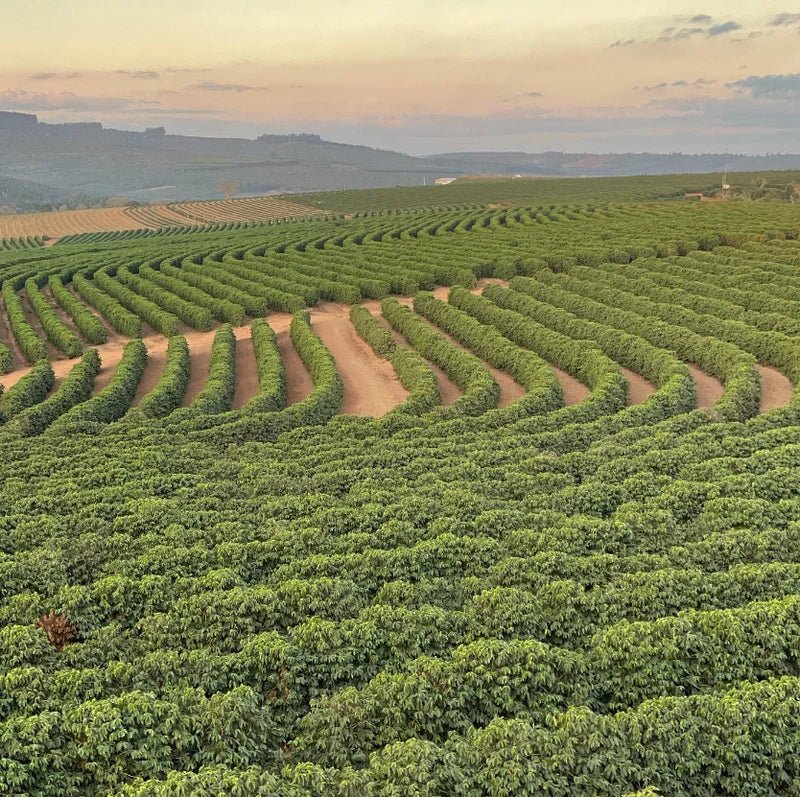
This Sudan Rume marks our first year working with this coffee from Julio César Madrid at La Milán, in Calarcá, Quindío, Colombia. Grown at 1,400 metres above sea level, it brings together three generations of coffee-growing experience and a considered approach to processing.
In 2014, Julio founded Café Uba, a project built around exploring the possibilities of Colombian coffee. Today, the team works across three farms, cultivating more than 20 varieties and developing fermentation and drying methods that have earned recognition in national and international barista championships.
For this lot, selectively harvested ripe cherries undergo 72 hours of fermentation in a bioreactor under controlled conditions. A thermal shock stage follows, before the coffee passes through multiple washing stages. Slow, controlled drying and a final stabilisation period allow moisture to reach equilibrium before preparation for export.
Sourced through CATA Export, this release offers an opportunity to explore Sudan Rume through the work of a producer committed to experimentation and careful execution. We have chosen a roast profile for filter brewing, keeping the focus on the coffee and the work behind it.
Enjoy
Producer – Julio César Madrid
Location – Calarcá, Quindío, Colombia
Farm – La Milán
Variety – Sudan Rume
Altitude – 1400 MASL
Process – Extended Washed
Cupping Notes – Orange Fruits, Sweet Aromatics, Silky Body
Roast Level – Light
Suitable For – All Filter Brew Methods
Exporter – CATA Export
Importer – CATA Export
Download a Digital Tasting Card
Disclaimer: Cupping notes are a guide based on what we tasted whilst cupping this coffee. Your experience may differ depending on brewing method.
About
Julio César Madrid comes from a family with three generations of coffee-growing tradition. In 2014, he founded Café Uba with the aim of creating something different from traditional coffee businesses in Colombia.
The Uba team works across three farms: Riviera, Milán and Buenos Aires. Together, these cover 200 hectares and grow more than 20 coffee varieties. Their innovative fermentation and drying methods have gained national and international recognition in barista championships.
This lot comes from La Milán, listed in the supplier’s information at 1,400 metres above sea level in Calarcá, Quindío. The team’s work combines respect for the land with careful attention to cultivation and processing, seeking to express the diversity of the region’s coffees.
The variety
This lot is Sudan Rume also known as Rume Sudan, is an Arabica landrace originating from the Boma Plateau in what is now South Sudan, close to the Ethiopian border. Its name comes from the Rume locality, where botanist A. S. Thomas collected coffee seeds in 1941. These seeds were distributed to research stations across East Africa, helping establish the variety in coffee collections and breeding programmes. Its history connects it to the wild coffee populations of South Sudan, an important source of Arabica’s genetic diversity.
Alongside its potential for excellent cup quality, Sudan Rume has been valued for its resistance to coffee berry disease. This made it useful to breeders seeking to improve the resilience of cultivated coffee, and its genetics contributed to varieties including Centroamericano and Batian. However, its relatively low productivity has limited widespread commercial planting, making it an uncommon offering when grown and presented as a separate variety.
The precise date and route of Sudan Rume’s first introduction to Colombia are unknown. Research does document its presence in the Colombian Coffee Germplasm Collection, showing its place within the country’s scientific work on coffee genetics. Its subsequent cultivation on specialty farms has given producers an opportunity to explore its potential beyond its use in breeding programmes.
Today, Sudan Rume is primarily grown for use in coffee breeding programmes, although it is also cultivated commercially in small quantities, where it is prized for its cup quality and relative rarity.
In Colombia, a number of specialty producers grow Sudan Rume to produce small lots for international markets. Their work has established a place for this African-origin variety within Colombian specialty coffee, where its heritage and quality potential offer compelling reasons to cultivate it despite its relatively low yields.
The Processing Method
Ripe cherries are selectively harvested before undergoing an extended washed fermentation under controlled conditions. The supplier specifies 72 hours of fermentation in a bioreactor.
A thermal shock stage follows, described by the producer as a way to stabilise microbial activity and preserve aromatic compounds. The coffee then passes through multiple washing stages to develop clarity and definition in the cup.
Slow, controlled drying helps preserve the coffee’s florals and juicy acidity. A final stabilisation period allows moisture to reach equilibrium before the coffee is prepared for export.
The resulting profile is described as bright and precise, with a light-to-medium body and a clean, juicy, lingering finish.
Filter Recipe
This is a good starting point for all of our Filter coffees. Adjust Accordingly to your own preference.
Ground Coffee: 20g
Brewed Weight: 320g
Contact Time: 3-3:30 mins
Water
Your brewing water can make or break whether a coffee tastes vibrant and expressive or flat and muted. Since local water supplies vary, we have partnered with Apax Lab to help optimise your home brewing water. The following recipes are designed as starting points, focusing on clarity and even extraction to let the coffee’s natural acidity and sweetness shine.
For the Low Key Approach
Base Water: Christchurch tap water
• Hardness (GH): 45 ppm
• Alkalinity (KH): 52 ppm
• Apax Drops per 1 L - Tonik: 1 g; Jamm: 0.5 g
Since the alkalinity is already relatively high, Lylac is not needed, as alkalinity naturally buffers acidity. Instead, we focus on Tonik for improved extraction and Jamm to enhance texture, helping round out the cup.
Adjusting for Local Water Conditions
Christchurch’s water supply is sourced from multiple groundwater wells across the city. While the overall water profile is relatively consistent, natural variation exists between supply zones. As a practical rule of thumb, the PPM may vary by approximately 5–15 ppm depending on location.
For this reason, the recommended APAX recipe should be viewed as a starting point rather than a fixed target. The strength of the APAX system lies in its flexibility; mineral ratios can be adjusted easily to suit local water conditions and taste preferences.
If coffee tastes flat or lacks vibrancy, increasing Tonik may improve extraction, flavour clarity and acidity. If coffee tastes overly sharp or acidic, increasing Jamm may help improve balance and perceived sweetness. Adjustments should be made incrementally and evaluated through taste.
For the Coffee Geek
Base Water: Fully distilled water, 1 L (<1 ppm TDS)
• Tonik: 1.1 g
• Jamm: 1.1 g
• Lylac: 1.1 g
• Target PPM: 85–95 ppm
This recipe provides a balanced starting point, designed to maximise clarity and allow the coffee’s natural characteristics to shine. From here, you can make small adjustments depending on the coffee you are brewing and your personal taste preferences.
For example, if you are brewing a washed Gesha with beautiful florals but the acidity feels a little too sharp or angular, try adding an additional 0.2 g of Lylac. This helps buffer the acidity, creating a sweeter, more harmonious cup while preserving the coffee’s delicate floral character.
Learning how each mineral influences flavour is one of the most powerful tools available to the home brewer. Rather than changing your recipe or grind, subtle adjustments to your water chemistry can unlock entirely new dimensions in a coffee.
Always add the drops to the water before brewing, not to the brewed coffee.
If you need assistance or are simply curious about the Apax drops, our Head of Coffee, James, welcomes all enquiries. You can get in touch at james@coffeeembassy.co.nz.
Recommended Brewing Age
12+ days after roast date
Share