

CoffeeEmbassy
Kagumoini AA | Kenya Washed
Kagumoini AA | Kenya Washed
Couldn't load pickup availability
Kagumoini AA | Kenya
Producers – 1,384 smallholder farmers, Kamacharia Farmers’ Cooperative Society
Location – Murang’a County, Kenya
Farm – Small scale farmers working with Kagumoini Coffee Factory (processing station)
Variety – Batian, Ruiru 11, SL28, SL34
Years Used – 1st Year
Altitude – 1750 masl
Process – Washed
Cupping Notes – Berries, Cola, White Sugar
Roasted For – All filter brew methods
Roast Level – Light
Importer – Cofinet
Disclaimer: Cupping notes are a guide based on what we tasted whilst cupping this coffee. Your experience may differ depending on brewing method.
Download a digital tasting card
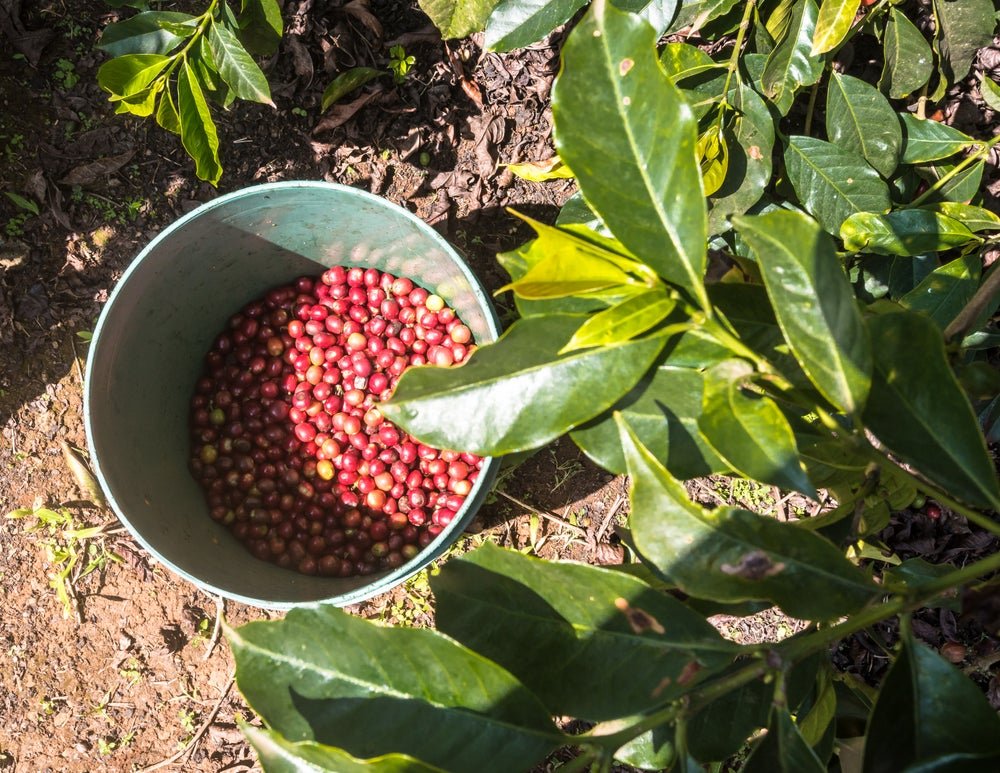
High in the hills of Kenya’s Murang’a County, Kagumoini Coffee Factory brings together the work of 1,384 smallholder farmers who form part of the Kamacharia Farmers’ Cooperative Society. Together, they produce coffees that reflect the region’s distinctive growing conditions and a shared commitment to quality.
Grown at 1,750 metres above sea level, the coffee benefits from fertile red volcanic soils, consistent rainfall and a temperate climate. These conditions encourage the cherries to mature slowly, allowing time for the development of the sweetness and complexity that Kenyan coffees are so well known for.
Once harvested, the ripe cherries are delivered to Kagumoini Factory, where they undergo traditional washed processing. The cherries are pulped, fermented overnight and thoroughly washed before the parchment is soaked in fresh water. The coffee is then carefully dried on raised beds, allowing for even airflow and controlled moisture reduction.
Beyond the coffee itself, the cooperative supports its members through ongoing agricultural training, responsible water management and reforestation initiatives.
The result is a beautiful expression of Kenyan coffee, showcasing the vibrant fruit character, sweetness and lively acidity that make coffees from this region so distinctive.
Enjoy.
About
Kagumoini Coffee Factory is located in Murang’a County, Kenya, and processes coffee from 1,384 smallholder members of the Kamacharia Farmers’ Cooperative Society. The coffee is grown at 1,750 metres above sea level in fertile red volcanic soils, with annual rainfall of approximately 1,100 mm and temperatures ranging from 16–26°C. These conditions support slow cherry maturation and the development of sweetness and complexity.
The cooperative provides training in Good Agricultural Practices, maintains soak pits for wastewater management and encourages reforestation across member farms.
Quality and Classification
Kenyan coffees are graded by screen size, with AA beans being the largest (17/18 screen, >7.2 mm). The country’s reputation for meticulous processing and world-class flavour has made its coffees some of the most sought-after globally.
The Varieties
SL28
Developed in the 1930s, SL28 is one of Kenya's most celebrated coffee varieties. It is renowned for producing exceptional cup quality with vibrant acidity, juicy fruit character, and remarkable sweetness. Although less resistant to disease, its outstanding flavour potential has made it a benchmark variety that continues to be highly sought after by coffee producers and roasters worldwide.
SL34
SL34 is another iconic Kenyan variety selected in the 1930s for its excellent cup quality and adaptability. It typically produces coffees with a rich body, bright acidity, and layered notes of blackcurrant, citrus, and brown sugar. While susceptible to disease, it thrives in fertile, well-watered regions and remains a cornerstone of Kenya's specialty coffee reputation.
Ruiru 11
Released in 1985, Ruiru 11 was developed to improve resistance to coffee leaf rust and coffee berry disease while maintaining good cup quality. It is a compact, high-yielding variety that suits modern farming systems. When grown and processed well, Ruiru 11 can deliver sweet, balanced coffees with bright fruit notes and a clean finish.
Batian
Batian is a newer Kenyan variety released in 2010 by the Kenya Coffee Research Institute. Bred for high yields, improved disease resistance, and excellent cup quality, it combines the strengths of traditional and modern varieties. Batian often produces coffees with vibrant acidity, floral aromatics, juicy fruit flavours, and a sweet, complex finish.
The Processing Method
After ripe cherries arrive at Kagumoini Coffee Factory, they are pulped with fresh water and fermented overnight to break down the mucilage. The parchment is then thoroughly washed, soaked in fresh water and spread across raised drying beds. Sun drying and airflow allow for even moisture reduction.
Filter Recipe
This is a good starting point for all of our filter coffees. Adjust Accordingly to your own preference.
Ground Coffee: 20g
Brewed Weight: 300g
Contact Time: 3:00-3:30 mins
Water
Your brewing water can make or break whether a coffee tastes vibrant and expressive or flat and muted. Since local water supplies vary, we have partnered with Apax Lab to help optimise your home brewing water. The following recipes are designed as starting points, focusing on clarity and even extraction to let the coffee’s natural acidity and sweetness shine.
For the Low Key Approach
Base Water: Christchurch tap water
-
Hardness (GH): 45 ppm
-
Alkalinity (KH): 52 ppm
-
Apax Drops per 1 L — Tonik: 1g; Jamm: 0.5g
Since the alkalinity is already relatively high, Lylac is not needed, as alkalinity naturally buffers acidity. Instead, we focus on Tonik for improved extraction and Jamm to enhance texture, helping round out the cup.
Adjusting for Local Water Conditions
Christchurch’s water supply is sourced from multiple groundwater wells across the city. While the overall water profile is relatively consistent, natural variation exists between supply zones. As a practical rule of thumb, the PPM may vary by approximately 5–15 ppm depending on location. For this reason, the recommended APAX recipe should be viewed as a starting point rather than a fixed target. The strength of the APAX system lies in its flexibility; mineral ratios can be adjusted easily to suit local water conditions and taste preferences.
If coffee tastes flat or lacks vibrancy, increasing Tonik may improve extraction, flavour clarity and acidity. If coffee tastes overly sharp or acidic, increasing Jamm may help improve balance and perceived sweetness. Adjustments should be made incrementally and evaluated through taste.
For the Coffee Geek
Base Water: Fully distilled water, 1 L (<1 ppm TDS)
-
Tonik: 1.1 g
-
Jamm: 1.1 g
-
Lylac: 1.1 g
-
Target PPM: 85–95 ppm
This recipe provides a balanced starting point, designed to maximise clarity and allow the coffee’s natural characteristics to shine. From here, you can make small adjustments depending on the coffee you are brewing and your personal taste preferences.
For example, if you are brewing a washed Gesha with beautiful florals but the acidity feels a little too sharp or angular, try adding an additional 0.2 g of Lylac. This helps buffer the acidity, creating a sweeter, more harmonious cup while preserving the coffee’s delicate floral character.
Learning how each mineral influences flavour is one of the most powerful tools available to the home brewer. Rather than changing your recipe or grind, subtle adjustments to your water chemistry can unlock entirely new dimensions in a coffee.
Always add the drops to the water before brewing, not to the brewed coffee.
If you need assistance or are simply curious about the Apax drops, our Head of Coffee, James, welcomes all enquiries. You can get in touch at james@coffeeembassy.co.nz.
Recommended Brewing Age
14+ days after roast date
Share