

CoffeeEmbassy
Embassy Blend
Embassy Blend
Couldn't load pickup availability
What is Embassy?
Embassy is a modern blend made up of two exceptional, fully traceable coffees. It’s a blend that’s true to our values, and sourced with intention.
This blend brings together:
-
A washed Caturra from Jairo Arcila’s Santa Monica farm in Colombia, brought to us through Cofinet
-
A natural Catucai from the Serra Dos Ciganos community in Brazil, sourced through FAF Coffees.
The result is a modern espresso that is complex, fresh, and balanced, designed to shine both black and with milk. As a black coffee we taste sweet notes of apple and dates, and as a flat white we experience a creamy body with a flavour profile reminiscent of apple crumble and vanilla custard.
For more information on this new iteration of our Embassy blend, and the next step in our journey towards a more values-focused sourcing approach, read our recent journal entry.
Coffee Information
Colombia Jairo Arcila
Producer: Jairo Arcila
Location: Armenia, Quindio
Farm: Santa Monica
Variety: Caturra
Years used: 4th year
Altitude: 1450 - 1500 MASL
Process: Washed
Suitable For: Espresso/Punger/Stovetop
Roast Level: Medium
Exporter: Cofinet
Importer: Cofinet
The Variety
Caturra is a natural mutation of the Bourbon variety, discovered in Brazil in the 1930s. It is prized for its dwarf growth habit, which makes it more compact than Bourbon plants, allowing higher planting density and easier harvesting—particularly beneficial for small-scale and mechanized farms. Caturra tends to produce medium yields and is moderately resistant to certain diseases, although it can be more susceptible to leaf rust than some newer hybrids.
In the cup, Caturra is known for its clean, bright profile, often highlighting sweet, citrusy, and fruity notes with a light to medium body. Its flavor clarity makes it a popular choice in specialty coffee, and it’s widely cultivated in Colombia, Brazil, and Central America. Farmers often select Caturra for its combination of manageable size, decent yield, and quality cup characteristics.
Processing Method: Washed
This coffee is harvested with strict criteria regarding ripeness of the cherries. They are floated and hand sorted to remove any defect cherries - this is an effective way to find any defects as they float while the good cherries sink.
Once sorted, the cherries are then fermented underwater for 30 hours, pulped, then gently washed and dried in temperature controlled conditions until the ideal moisture content is reached.
The Washed Method (A general overview)
Washed (Wet) Coffee Process
-
Harvesting:
Only ripe coffee cherries are picked—either by hand or with selective mechanical methods. Ripeness is key because under- or over-ripe cherries can negatively affect flavor. -
Pulping:
The outer skin and most of the fruit flesh are removed from the cherries using a pulping machine, leaving the coffee beans coated with a layer of sticky mucilage. -
Fermentation:
The beans, still covered in mucilage, are placed in fermentation tanks with water. Natural enzymes break down the mucilage over 12–48 hours, depending on temperature and altitude. -
Washing:
After fermentation, the beans are thoroughly washed with clean water to remove all remaining mucilage. This is why it’s called the “washed process.” -
Drying:
The beans are dried to around 10–12% moisture either on patios, raised beds, or mechanical dryers. This step is crucial to prevent mold or fermentation defects. -
Hulling:
The dry beans, now called parchment coffee, have their final parchment layer removed before roasting.
_____
FAF Bob-o-Link Catucai
Producer: FAF Coffee & Serra Dos Ciganos Community
City: Caconde
Region: Mogiana
State: Sao Paulo
Community: Serra Dos Ciganos
Variety: Catucai
Years used: 1st year
Altitude: 1200 - 1350 masl
Process: Natural - 36 Hour Anaerobic Fermentation
Suitable For: Espresso/Punger/Stovetop
Roast Level: Medium
Exporter: FAF Coffee
Importer: Sucafina
The Variety
Catucaí is a Brazilian-developed Arabica hybrid, created by crossing Catuai and Icatu. Genetically, it is a second-generation breeding product designed to meet modern farming demands:
-
Catuai = Mundo Novo × Caturra
-
Catucaí = Catuai × Icatu
This breeding strategy gives Catucaí a blend of high productivity, disease resistance, and approachable cup quality. It is widely adopted in Brazil and other coffee-growing regions like Central America, Panama, and select areas of Colombia.
Plant Characteristics:
-
High productivity with consistent yields
-
Good vigor and strong structure
-
Compact growth, suitable for high-density planting
-
Enhanced disease resistance, especially against leaf rust, compared to Catuai and Caturra
-
Performs well in windy or wet climates
Farming Advantages:
-
Reliable production and harvest consistency
-
Tolerant to rust and other common diseases
-
Adaptable to mechanized or intensive farming systems
Catucaí is appreciated not just for its agronomy but also for its versatile, approachable flavor:
-
Acidity: Moderate, bright but gentle
-
Body: Smooth and balanced
-
Flavor Notes: Honeyed sweetness, soft chocolate, and delicate fruit tones - often yellow fruits or light tropical notes
-
Finish: Clean and easy-drinking
Its profile makes it suitable for both single-origin offerings and blends, offering reliability and consistency for roasters and producers alike.
Processing Method: Natural
Great pride is taken in producing clean and distinctive coffees. The belief is that specialty coffee should be both clean and sweet, and that diversity of flavour brings richness to the sensory experience. Processing methods are continually studied and refined in pursuit of truly elegant coffees.
When coffee cherries are picked from the tree and dried until the seed (the coffee bean) reaches a humidity of approximately 11%—the ideal level for safe storage.
After harvesting, the cherries are carefully sorted before determining the most suitable processing method. The aim is to craft coffees using signature processing styles that highlight distinctive and expressive flavours in the final cup.
Naturals:
One of the oldest coffee processing methods, the natural process involves drying the coffee fruit intact—skin, mucilage, pulp, parchment, and seed. After harvesting, the cherries are brought to the patio where they are spread out to dry.
When conditions allow, the cherries undergo natural fermentation due to the presence of sugars, moisture, and wild strains of yeast and bacteria. This process is believed to enhance the fruit-forward character of the coffee and, in some cases, increase the perception of sweetness as well as body and mouthfeel.
At the various FAF partner farms, cherries are carefully sorted on the day of harvest before being transferred to raised beds and patios for drying. Great pride is taken in producing “clean naturals,” coffees that deliver a sensory experience of fruitiness, sweetness, and well-balanced acidity. By balanced, it means that no single acidic note—such as a sharp acetic taste—dominates.
Because natural coffees undergo wild fermentation, they can be some of the most interesting and dynamic coffees.
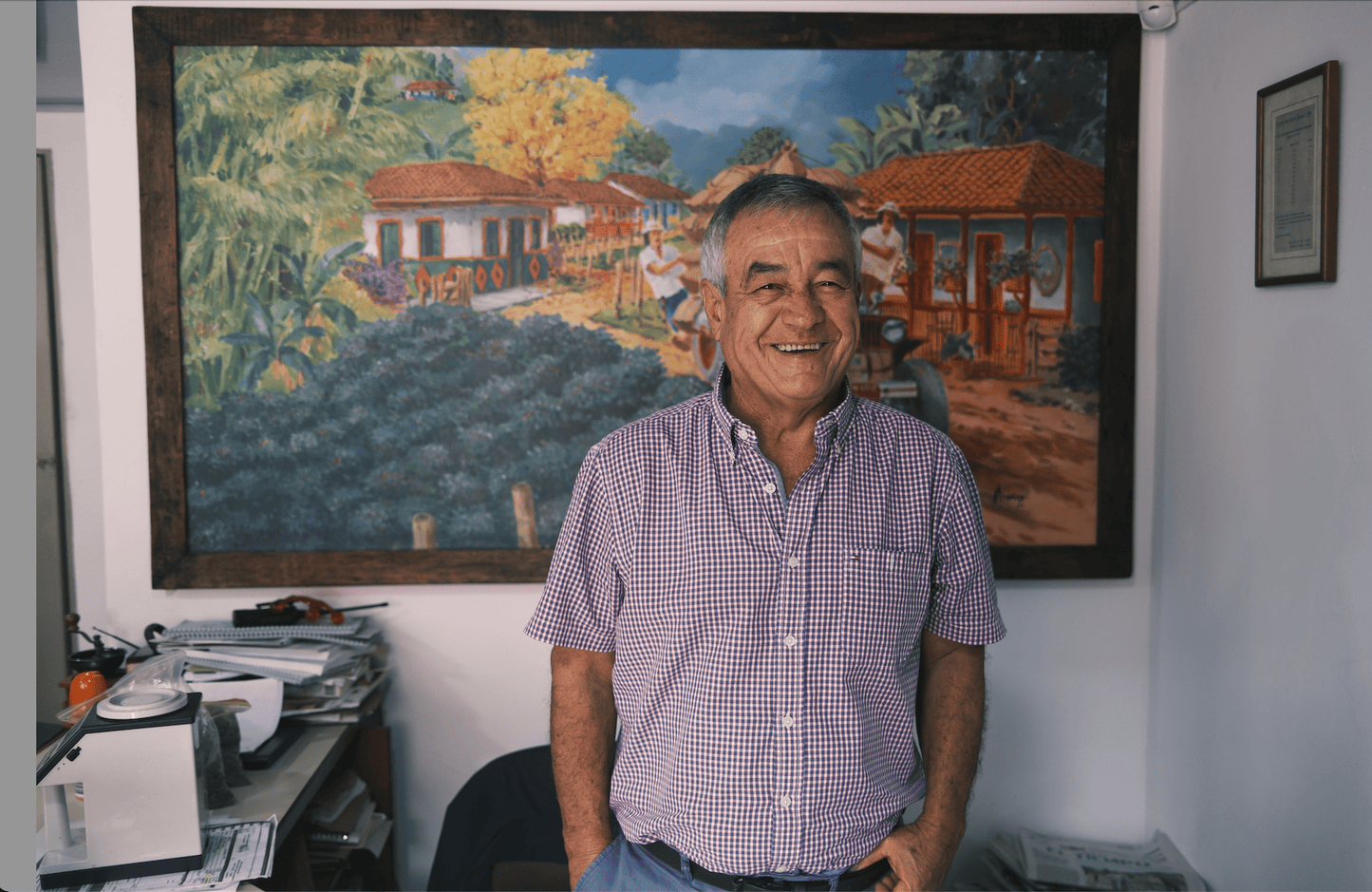
About Jairo Arcila
Jairo Arcila is a third-generation coffee grower from Quindío, Colombia. He is married to Luz Helena Salazar, and together they have two sons, Carlos and Felipe Arcila—the co-founders of Cofinet.
Jairo began his career at Colombia’s second-largest coffee exporter, where he worked as Mill Manager for over 40 years until retiring in 2019. In 1987, he purchased his first coffee farm, Finca La Esmeralda, where he planted his first lot of Caturra. Balancing full-time work with farming, he reinvested his earnings to eventually acquire five additional farms: Villarazo, Mazatlán, Santa Monica, Maracay, and Buenos Aires.
During harvest season, Jairo creates employment opportunities for local workers, contributing meaningfully to the local economy.
With the expert guidance of his sons, Jairo has significantly enhanced his coffee production practices—improving picking, sorting, and processing techniques, while also embracing the cultivation of exotic coffee varieties such as Pink Bourbon, Java, Papayo, and Gesha. This collaboration has enabled him to produce exceptional coffees with distinct flavour profiles.
In addition to coffee, Jairo cultivates a range of crops including mandarins, oranges, plantains, and bananas. He values a hearty breakfast to start the day—and above all, he cherishes spending time with his family.
About FAF, Bob-o-link, and Serra dos Ciganos
FAF Coffees is the family-run hub that connects and supports a network of farms across Brazil. Bob-o-link Coffee is the collaborative project that brings those farms together under a shared focus on sustainability and quality, and the Serra dos Ciganos Community is one of the key farming regions working within that system to produce coffee. Read on for more information about each one.
Bob-o-link
Bob‑o‑link Coffee takes its name from the Bobolink, a migratory bird that travels annually from the Midwestern United States to southeastern South America. The founders of Bob-o-link chose this name to evoke a sense of global connection and environmental awareness.
In 1991, the family behind Bob‑o‑link moved from São Paulo, Brazil, to Chicago, USA. While in the United States, they became inspired by conservation efforts surrounding the bird, and adopted it as a symbol for sustainability and stewardship. Around this time, they inherited the family farm in Brazil, Fazenda Fortaleza, and began a deliberate shift toward environmentally friendly and sustainable coffee farming. The farm was renamed Fazenda Ambiental Fortaleza, or “Environmental Fortress Farm,” to reflect this mission.
At Fazenda Ambiental Fortaleza, the family eliminated toxic materials, protected water sources, and created green corridors for wildlife. Fruit trees such as bananas, mangoes, and avocados were planted among coffee trees to restore natural habitats. Recognising that environmental protection required a broader effort, the family invited neighboring smallholder farmers to join a network of family farms committed to sustainable agriculture and shared quality standards.
Today, Bob‑o‑link Coffee represents a collective project of high-altitude Arabica coffee farms in Brazil’s Mogiana region, spanning the states of São Paulo and Minas Gerais. The coffee is grown between 900 m and 1 400 m elevation, hand-picked, and dried near the farmers’ homes, combining traditional craftsmanship with ecological stewardship.
The story of Bob‑o‑link Coffee reflects a broader mission: protecting nature, fostering harmony between people and the environment, and promoting sustainable agriculture practices, all symbolized by the migratory journey of the Bobolink bird.
FAFCoffees
At Fazenda Ambiental Fortaleza, great pride is taken in producing high-quality coffee while maintaining a strong commitment to sustainability, both socially and environmentally.
As a centre for coffee knowledge, laboratories operate both on the farm at FAF and in the city of São Paulo. The goal is to share and promote the culture of specialty coffee and sustainable farming practices throughout Brazil.
Fazenda Ambiental Fortaleza (FAF) is a small, family-run green bean coffee supplier and the centre of a network of farms that work together. Their aim is to produce some of the highest-quality and most unique coffees from Brazil.
The FAF farm is organically certified, and several partner farms within the network are also organic. While not all farms are fully organic, FAF encourages all partners to adopt sustainable practices and reduce the use of agrochemicals wherever possible.
Beyond quality, FAF is committed to environmental and social responsibility, producing coffees that are sustainable and considerate of both the ecosystem and the wellbeing of the people involved. Their approach involves the entire supply chain,from producer to end consumer, fostering collaboration, lasting relationships, and a shared purpose.
Coffee is at the centre of everything they do, and their goal is to involve the entire supply chain, from producer to consumer, working together to continually improve the quality and accessibility of these coffees while building lasting relationships and a shared sense of purpose.
Serra Dos Ciganos Community
The Serra dos Ciganos Community and wet mill sits atop the mountains bordering the states of São Paulo and Minas Gerais. It is located in the municipality of Caconde and with plenty of natural springs, the valley forms an important watershed, contributing to the Rio Pardo River. The name “Serra dos Ciganos”, which means “Gipsy Mountains”, arose in the 19th century, when the valley was used as a camp for travelers, who were passing through.
In 2008, this community of fourth generation coffee farmers started working with FAFCoffees on a new coffee production model for the region. Instead of selling their dried coffees to local buyers they chose to work with FAFCoffees to raise quality and think of coffee as a beverage, not as a commodity.
Along with better control of the post-harvest processes and the application of new techniques, such as raised beds and careful turning, the full potential of their coffee could be revealed.
Recipe
This is a good starting point for all of our espresso coffees. Adjust Accordingly to your own preference
Ground Coffee: 20g Espresso
Weight out: 25g
Contact Time: 25-30 Seconds
Recommended brewing age
10+ days after roast date
Subscriptions
For more info on subscriptions, head to the Subscriptions page.
Price Adjustments to Embassy Blend
Embassy blend has recently evolved into a more intentional, values-led blend, made up of exceptional, fully traceable coffees. As a result, incremental price adjustments will be put in place in May and June. Find out more about the changes and what they mean for your cup here. For something closer in price and profile to what Embassy previously was, we recommend trying our Ranger Regional blend.
Share